Your book, grounded in you
Write the book only you can write.
Your experience, ideas and perspective give your book its purpose. riter is designed to help you develop that original thinking into a manuscript, with personal AI writing assistance and your judgement at its centre.
Try the writing preview with Google sign-in. Your writing is saved in this browser, on this device. Signing in does not sync or back up your work. What that means for you.
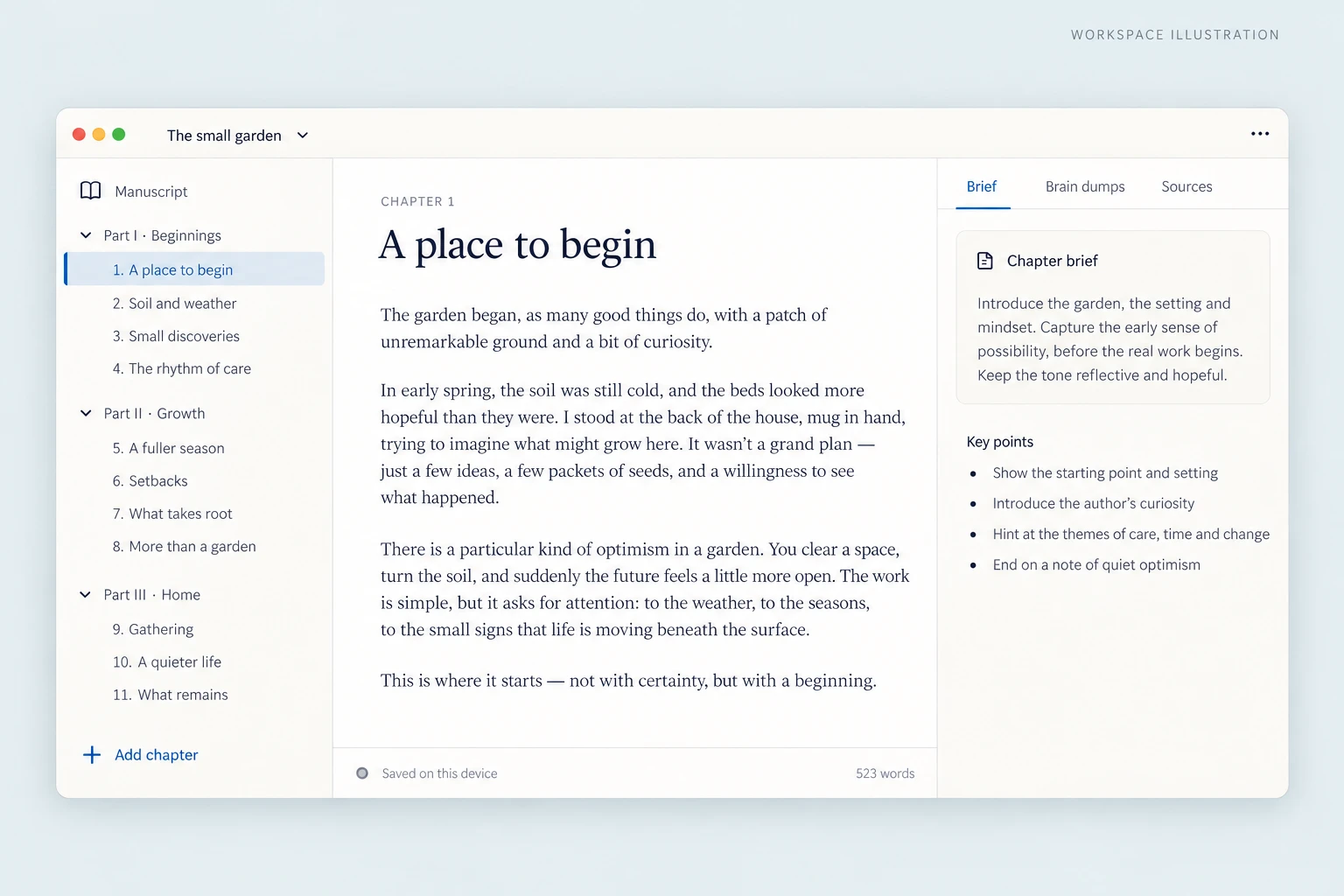
The book you want to make
Develop what you know into a book that feels like yours.
A good book carries a perspective worth sharing. Our aim is to help you bring yours into focus: drawing on what you know, developing the argument or story and giving each chapter the care it needs. You remain the author throughout.
Your book deserves more than AI slop.
Generic prose and unsupported claims weaken a book. Your experience and judgement should shape the writing, with assistance that helps you develop your own contribution. Why riter, and how it compares →
A companion for the whole book
This is a preview of the complete author experience we are working towards. The free writing workspace lets you try chapters, notes and wording review; the wider assistance described here is our product vision.
Begin with your own thinking
Author and book interviews, spoken thoughts and selected writing give your book a foundation in your experience, purpose and intended reader.
Develop the argument or story
Assistance with outlines, chapters and research helps you build a coherent manuscript. Follow characters through a story or develop the frameworks in a technical book, with changes for you to review.
Give the work its finished form
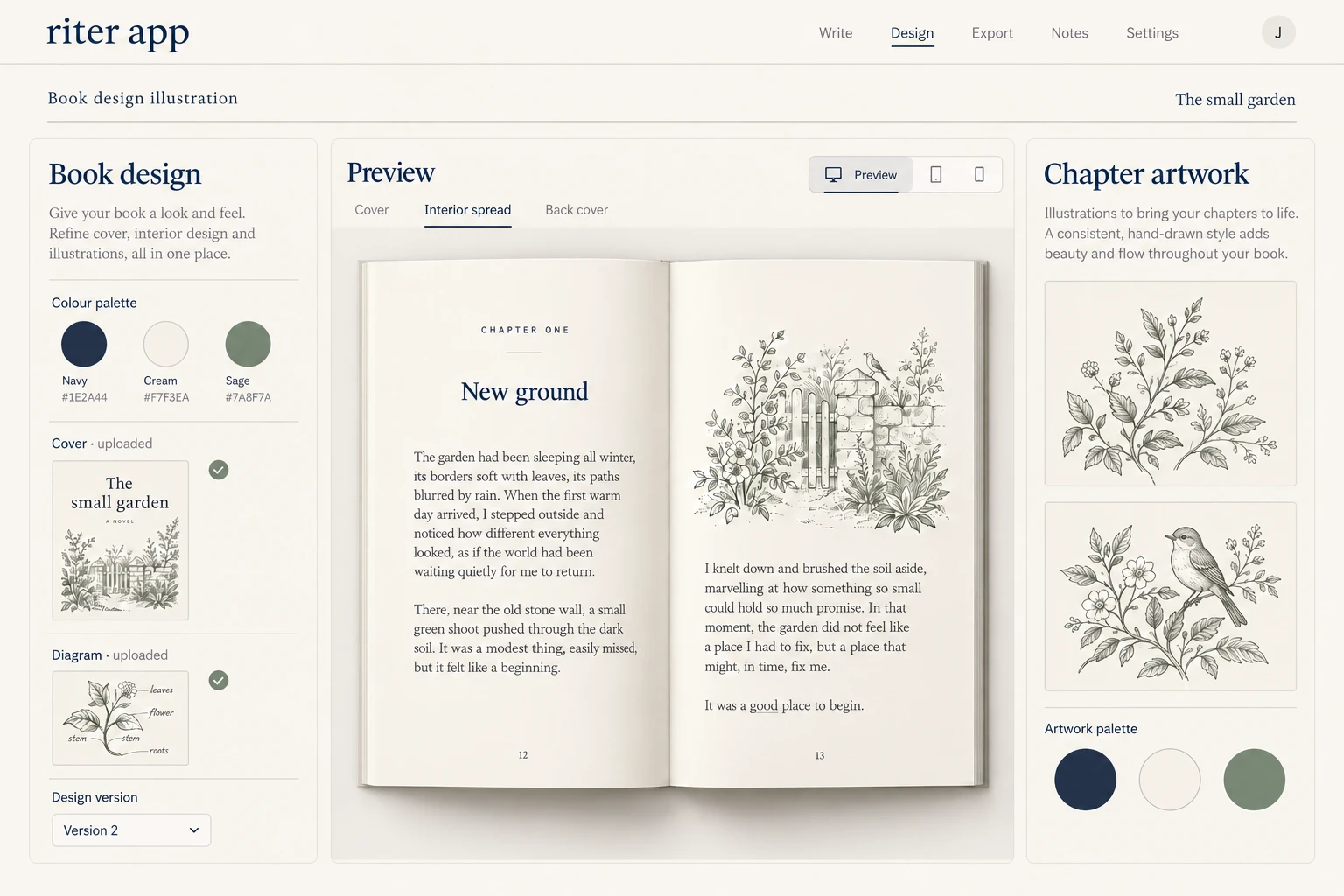
Bring the writing and its visual identity together. Our vision includes book design and manuscript exports in Markdown, Word and PDF, so you can choose where your work goes next.
A closer look at your chapter
Keep shaping the words your readers will see.
Work chapter by chapter, with notes beside your draft. When you want to take your writing elsewhere, export a chapter or your whole book to Markdown.
Understand the feedback in the writing preview
Voice, originality, accuracy and continuity each have a separate state. They are shown separately.
Originality highlights wording patterns for review. Text integrity checks its characters separately. Voice reads unavailable; accuracy and continuity read unavailable. These three states do not turn into measurements when you add writing or sections. See how each measure works →
The writing preview does not compare your draft with your own writing. No result is claimed where no measurement has been made.
$12 a month, or $120 a year
One price, with nothing held back behind a higher tier. Nothing is charged yet, and you will never be charged without being asked first. See what is included →
Your judgement stays central
riter highlights wording for your review. These checks do not establish authorship, detect plagiarism or verify facts. You choose what to revise; riter does not write your book for you.